
Pathway Light Lumens: How Many Do You Really Need?
When it comes to pathway light lumens, it’s tempting to pick the brightest option. For most walkways, though, less light works better. Here’s how to choose the right brightness, and why a softer glow is often the smarter choice.
What is a lumen?
A lumen measures how much visible light a fixture gives off. For reference, a candle gives off about 12 lumens, and a standard 60-watt-equivalent household bulb about 800.
How bright should pathway lights be?
The right pathway light brightness depends on what you want the light to do:
- Marking a path (5 to 30 lumens per light): a gentle glow that outlines edges and guides the way.
- Comfortable walking light (30 to 100 lumens): enough to see steps, edges and anything in the way.
- Bright task or security light (200 lumens or more): useful for a moment, when someone is actually there.
Spacing matters as much as brightness. Lights placed every 8 to 10 feet create even pools of light, so each one doesn’t need to be very bright. Your eyes also adjust to the dark. A lower, even glow is easier to see by than a few harsh lights, which create glare and make everything outside the beam look darker.
Why lower brightness is better at night
Too much outdoor light has real costs:
- The night sky: light that spills upward adds to sky-glow, which hides the stars.
- Wildlife: moths, bats, frogs and migrating birds rely on darkness. Bright light can disrupt how they feed, move and navigate.
- Neighbors: glare and light shining onto the next yard is a common complaint.
The Dark Sky movement suggests a few simple habits: use only as much light as you need, point it down, choose warm color temperatures (3000K or lower), and light only when it’s needed.
Motion sensors: bright only when you need it
Motion sensors give you the best of both: a soft glow most of the night, and brighter light only when someone is actually there. That keeps your pathway light lumens to what you need and nothing more. Many pathway lights now offer several modes:
- Low glow all night.
- Low glow that brightens when someone walks by.
- Off until motion, then on only while someone is there.
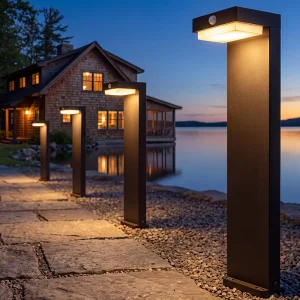
At VerLuce, we design our pathway lights around this idea. They keep a soft glow of about 50 lumens and brighten only when motion is detected. Some newer models can also stay off completely until someone walks by.
The bottom line of pathway light lumens needed
For most homes, 30 to 100 lumens per pathway light is plenty. Pair a low, warm glow with motion-activated brightness, and you’ll get a safe, welcoming path that leaves the night sky, and the wildlife in your yard, undisturbed.